
By Alexandra Heller-Nicholas
Texto escrito originalmente para o catálogo da mostra Mestras do Macabro: As Cineastas do Horror ao Redor do Mundo. Leia aqui a tradução para o português.
What does it mean when a rape-revenge film is made by a woman? Well, like men, it can mean a whole lot of different things. Women – because they are people – can be smart, stupid, funny, serious, cowardly, courageous, progressive or bigots. The gender of the filmmaker does not give a rape-revenge movie a magical, automatic ideological ‘get out of jail free’ card: a movie is not instantly protected from claims of exploitation or sensationalism simply because the person who made it is a woman. At best, these films are noteworthy because women as a broader demographic have historically been denied access to the director’s chair: even today, women directors are a minority, and still often considered a novelty. So if women rape-revenge film directors share one thing outside their shared subject of interest, it is this: they are working in a role that far too many people even today still consider to be a more “natural” fit for men.
It’s hard to identify what the first “official” rape-revenge film might be, simply because rape and revenge have always sat in some kind of indirect relation to each other, long before films like Ingmar Bergman’s Oscar-winning The Virgin Spring (1960), the film that would famously be re-imagined in Wes Craven’s exploitation classic Last House on the Left (1972). Rape-revenge stories go back at least to the Old Testament, and can be found everywhere from Ancient Greek mythology to Shakespeare. Pre-code films like William A. Wellman’s Safe in Hell (1931) and George Archainbaud’s Thirteen Women (1932) feature key elements of the rape-revenge trope without necessarily being “rape-revenge films” per se, and the very first episode of Alfred Hitchcock Presents which broadcast in 1955 – simply called “Revenge” – offers a very strong early example of how even by this time the expectations and assumptions about rape-revenge were being subverted, years before “rape-revenge” as a category even existed.
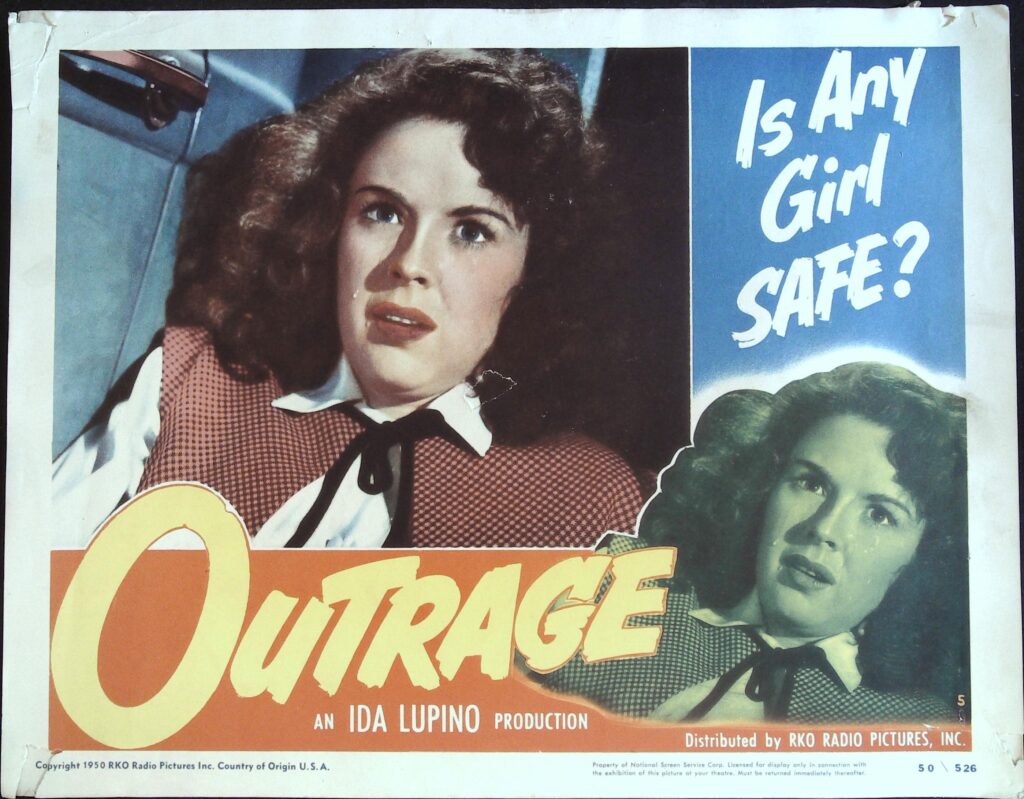
While not a revenge film per se, there is no serious consideration of the representation of rape trauma on film that can be complete without a concrete acknowledgement of Ida Lupino’s 1950 film, Outrage. Predating The Virgin Spring by a decade and Hitchcock’s rape-revenge TV episode by five years, even by today’s standards Outrage is an extraordinary viewing experience, focused on the assault and subsequent trauma of a normal, young suburban woman following a random attack as she walked home from work. More famous as a movie star herself, it has taken some time for Lupino’s directorial works to become widely available, and contemporary critics are far more admiring of her work than earlier feminist critics such as Molly Haskell who rejected Lupino’s films wholesale as misogynist, despite films like Outrage being the exact opposite. Compassionate, clear-minded, and unafraid, Outrage typifies Lupino’s so-called women’s pictures, where – aside from rape – she would explore everything from single motherhood to polio. Outrage came hot on the heels of Jean Negulesco’s Johnny Belinda (1948), a film which won Jane Wyman an Oscar for her performance as a deaf and mute woman who becomes pregnant after she is raped by a local lout, then saved through the love of the local doctor. But while films like Johnny Belinda and The Virgin Spring imply rape is a relic of a kind of primitive, monstrous past, for Lupino in Outrage, rape was very much a contemporary issue.
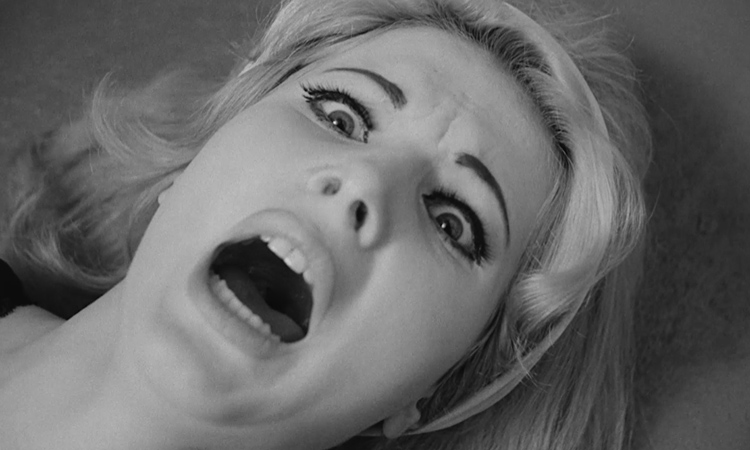
When it comes to women artists and authors of and rape-revenge narratives, these long pre-date the moving image: at the very least, Italian Baroque artist Artemisia Gentileschi and her painting Judith Beheading Holofernes (1612) has often been discussed through the lens of her own highly publicized sexual assault. But when we turn to film specifically, Doris Wishman’s Bad Girls Go to Hell (1965) is as good a place as any to begin looking at women- directed rape-revenge films specifically. Here, grindhouse icon Wishman featured a central rape-avenging protagonist in her iconic roughie, Gigi Darlene starring as the protagonist Meg, who is raped on the stairwell of her apartment block in Chicago by a man when she takes out her trash. Sliding a note under her door, he tells her that if she does not come to his apartment, he will tell her husband. She follows his instructions, expecting him to blackmail her, but he tries to rape her again and she fights back, killing him. She flees to New York where she changes her name to Ellen and hopes to blend in with the crowd. Moving from home to home, Ellen meets a parade of violent, sexually aggressive men, until she encounters a lesbian with whom she has a positive, caring relationship. However, when she sees that the Chicago murder has made the front page of the newspaper, Ellen – not
wishing to burden her lover with the consequences of her earlier actions – is forced to leave. She finally lands a job as a companion with a kindly old lady, discovering too late that her son is the policeman investigating the case. He confronts her, prompting her to plead “I didn’t mean to do it!”, referring to the rape-avenging murder of the man in her Chicago apartment building. But it was all a dream; Meg wakes up next to her husband, and the cycle begins again as her husband leaves for work, and she finds the same man in the same stairwell with the same intentions. Rape, revenge and its associated trauma are for Meg a never-ending cycle and the lines between nightmare and her reality have collapsed entirely.
While Wishman’s reputation as a key figure in sexploitation film history is assured, lesser known are more hardcore women pornographers who incorporated rape-revenge elements into their films, such as American adult filmmaker Ann Perry and her movies Teenage Sex Kitten (1975) and Sweet Savages (1979). But women have also long been making rape-revenge films that were more accessible to the mainstream. In The Ladies Club (1986), Janet Greek adapted Betty Black and Casey Bishop’s 1977 novel The Sisterhood to the screen, with Karen Austin and Christine Belford starring in a film about a group of middle-class suburban women banding together with other rape and sexual abuse survivors to abduct and castrate offenders before releasing them back onto the streets, taking the law into their own hands when the law has so aggressively failed them. Like the best rape-revenge films, however, The Ladies Club ends with significant questions about the effectiveness of this kind of vigilante justice: does it really help these women in their recovery?
Women were also making powerful rape-revenge informed films in the underground. The late US filmmaker Sarah Jacobson is today synonymous with 90s Riot Grrrl filmmaking primarily through the legacy of iconic 1996 feature Mary Jane’s Not a Virgin Anymore, but it is arguably her 1992 short I Was a Teenage Serial Killer that today packs the mightiest punch. Starring Kristin Calabrese as Mary, the film consists of a series of vignettes depicting a broad spectrum of abusive male behaviours towards women that Mary either witnesses, hears about anecdotally, or – most poignantly – experiences herself. Mary is demeaned, insulted, harassed, and at one point, a consensual sex scene becomes non-consensual
when her partner removes his condom without telling her mid-coitus. Understanding that this in itself is a form of sexual assault, Mary does not hesitate to kill him, forcing a banana into his mouth as an unsubtle fellatio metaphor to mirror the sexual violence she has just experienced at his hands. After a romance goes wrong and having killed 19 men, the film ends with Mary giving a powerful speech about how she just wants her pain acknowledged. Aside from being one of the most raw and exciting underground films of the 1990s, via Mary’s final speech alone I Was a Teenage Serial Killer directly addresses Jacobson’s desire for women filmmakers to be heard, issuing a manifesto of sorts for other women filmmakers that explicitly positions extreme violence as an understandable response to the enormity of what women experience under the patriarchal weight of rape culture.
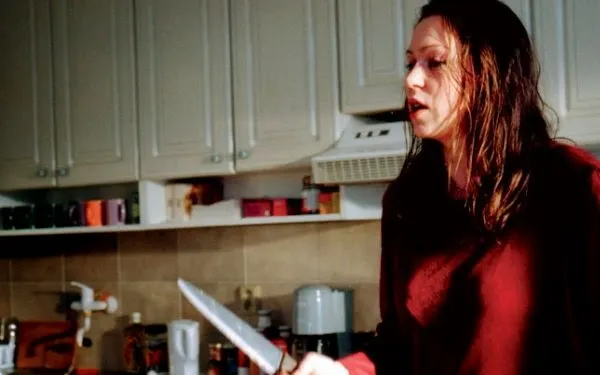
Of course, women-directed rape-revenge films are hardly a uniquely North American phenomenon. Rape-revenge films made by women can be found from all around the world, running the gamut of extreme exploitation like legendary Japanese pink film director Sachi Hamano’s Drifted Into Chaos (1989) to film festival darlings like Mouly Surya’s Marlina the Murderer in Four Acts (2017) from Indonesia. While best known for her iconic feminist masterwork Daisies (1966), Věra Chytilová is a key figure in the Czech New Wave who made the black comedy rape-revenge film Traps in 1998, an unusual and uncommon generic blend that made an impressive impact. Following a young vet who castrates her rich, powerful rapists in the same way that she castrates pigs, while Chytilová’s choice of comedy might at first seem insensitive or tone deaf, she uses it to powerful effect: resorting to slapstick to show the post-op rapists bumbling and stumbling, Chytilová at the same time always treats her rape-avenging protagonist and her experience with the utmost respect,sensitivity and dignity. The joke here is on the rapists.
From 2017, with the breaking of a series of news stories about now-convicted rapist producer Harvey Weinstein, the social movement known as #MeToo began in earnest, allowing a new fresh perspective on women-directed rape-revenge films. In this climate, movies that were once curios were now met with fresh new eyes and – rightfully – understood and appreciated as women filmmakers themselves seeking to use cinema as a creative forum to speak to the broader subject of rape and sexual violence. While some filmmakers such as Jennifer Kent and her film The Nightingale (2018) aggressively rejected and resisted
the rape-revenge label – despite the film pivoting explicitly around the acts of rape and subsequent revenge – other filmmakers such as Coralie Fargeat with Revenge (2017) and Brazilian filmmaker Natalia Leite’s M.F.A (2017) demonstrated how a conscious, deliberate engagement with the trope could be fully mobilized for powerful social critique. And with Emerald Fennell’s Promising Young Woman (2020) returning rape-revenge to the Oscar-winning space long ago established by Bergman’s The Virgin Spring, women-directed rape-revenge films in this context have been re-energized, giving voice to the diverse treatmentsof sexual violence by a professional demographic far too long rendered comparatively silent.
Alexandra Heller-Nicholas is the author of ten books on cult, horror and exploitation cinema, and winner of the 2024 Rondo Hatton Classic Horror Writer of the Year Award. Her 2020 book 1000 Women in Horror was adapted in 2024 into a feature documentary from Shudder of the same name (directed by Donna Davies), and Heller-Nicholas also appears in Alexandre O. Philippe's documentary Chain Reactions alongside Stephen King, Karyn Kusama, Takashi Miike and Patton Oswalt, which won the Best Documentary on Cinema Award at the 2024 Venice Film Festival.